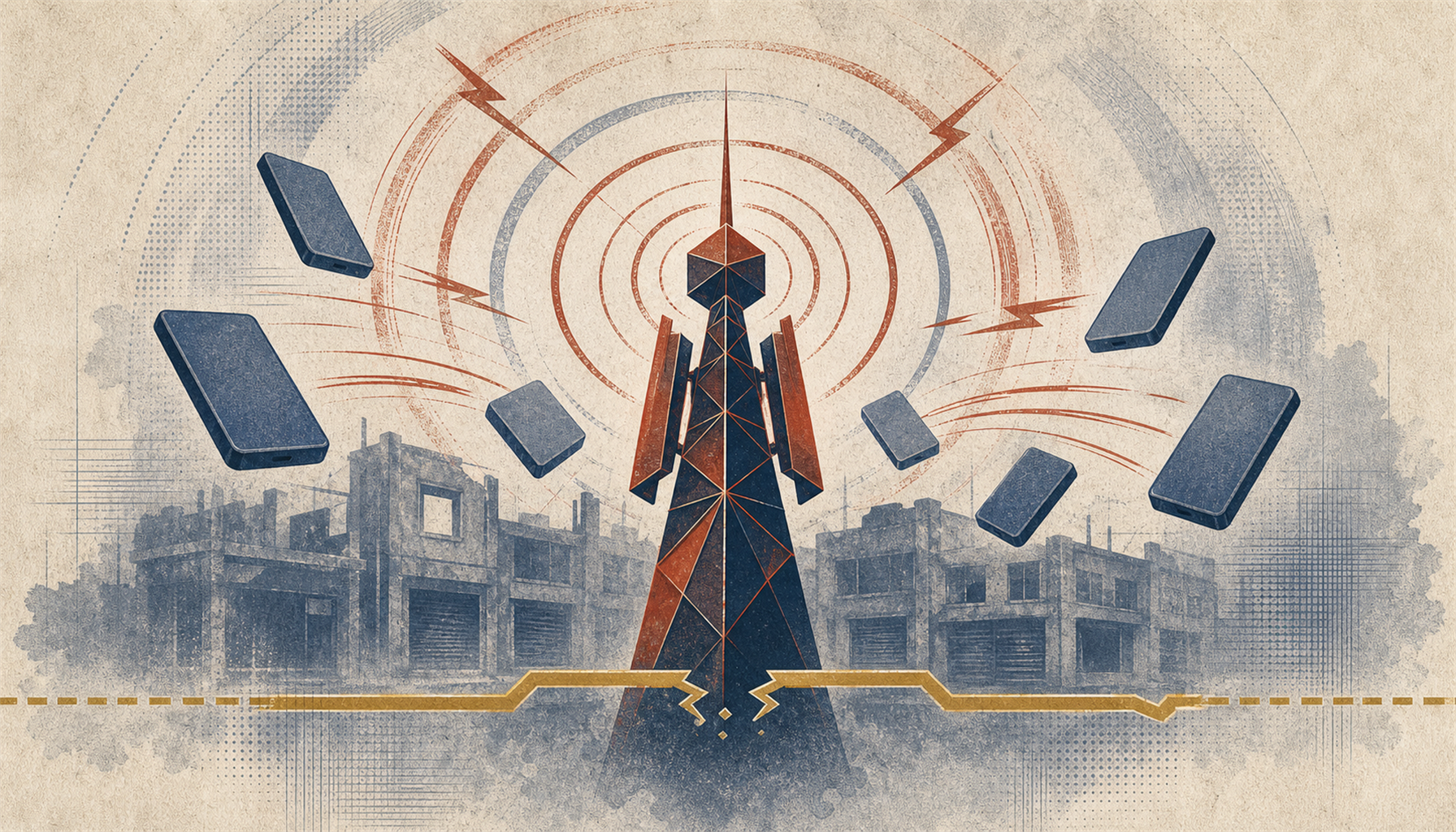
When the Philippine government shut down its offshore gaming operators in 2024, the official story was closure: the licenses revoked, the compounds emptied, the foreign workers repatriated. But infrastructure does not obey policy as neatly as buildings empty. The servers, the modem banks, and the specialized telecom hardware that powered those operations did not vanish when the POGOs did. Some of it is now being salvaged, reconditioned, and resold — and one category in particular has drawn a nationwide police crackdown: the text blaster.
The Philippine National Police chief warned in May 2026 that rogue sellers are salvaging multi-port GSM blasters from abandoned offshore-gaming sites and peddling them on social media, prompting a nationwide enforcement push the PNP itself described as battling guerrilla-style sales. The text-blaster trade is a small but telling chapter in a larger story this publication has tracked since the ban: the way the displaced POGO workforce and its leftover infrastructure keep getting absorbed into the region's scam economy rather than disappearing along with the licenses.
What a text blaster actually does
A text blaster is, in effect, a counterfeit cell site. Built around a high-powered GSM modem bank — police have described 32-port units — the device broadcasts as if it were a legitimate mobile tower. Phones within its range, following the normal behavior of latching onto the strongest available signal, connect to it. Once connected, the blaster can push SMS messages directly to those handsets, bypassing the telecom carriers entirely.
That bypass is the whole point. The Philippines introduced SIM registration and the carriers built network-level filters specifically to choke off the flood of scam texts that plagued Filipino phone users. A text blaster routes around all of it. Because the messages never traverse the carrier network, they are not subject to the registration checks or the spam filters that would otherwise catch them. The device delivers smishing — SMS phishing — at scale and at point-blank range, dropping scam messages onto every phone in a neighborhood, a mall, or a stretch of road as the operator moves through it.
The content those messages carry is the familiar smishing repertoire: fake bank and e-wallet alerts, bogus delivery notices, prize and lottery come-ons, and — relevant to this beat — unsolicited gambling and betting promotions designed to pull recipients toward unlicensed offshore platforms. The blaster is the delivery mechanism; the fraud is whatever the operator chooses to send through it.
Why the POGO ban feeds the trade
The connection between the text-blaster black market and the shuttered offshore gaming sector is not incidental. It is structural, and it runs through two channels: the hardware and the people.
The hardware channel is straightforward. The abandoned POGO compounds were equipped with exactly the kind of telecom infrastructure that the scam economy values, and when the operations were shut down, that equipment was left behind in sites that were not always secured. Salvaging it is a low-barrier way to extract value from the wreckage of a banned industry. The PNP's warning is precisely that sellers are pulling these units out of the abandoned sites and putting them back into circulation.
The people channel is the one this publication has documented most closely. The 2024 ban displaced a large workforce that possessed the technical familiarity to operate, recondition, and resell this hardware. As our reporting on the resurgent underground of Philippine cash gambling and the post-POGO Cambodia scam-casino nexus has traced, that workforce did not simply evaporate. Some migrated to scam compounds across the region; some folded into domestic illicit operations. The text-blaster trade is the small-scale, domestic, entrepreneurial end of the same displacement — ex-workers monetizing the skills and the equipment the ban left stranded.
"You can ban an industry and empty its buildings, but the equipment and the expertise outlive the policy. The question is always where they go next, and the answer is rarely nowhere."
PH Gaming Intel analysisThe crackdown and its limits
The PNP's response has been a nationwide push against both the sellers reconditioning salvaged units and the operators deploying them. The chief's own characterization — guerrilla-style sales — captures the enforcement problem. The trade is decentralized and social-media-based, with listings that appear, transact, and vanish faster than enforcement can reliably follow. Suppressing the supply means chasing sellers across platforms that are built for exactly the kind of ephemeral, peer-to-peer commerce that frustrates traditional policing.
The crackdown sits within a broader, more structured enforcement effort. The Presidential Anti-Organized Crime Commission has reported liberating 5,949 people, including thousands of foreigners, in the wider campaign against scam operations, and the Philippines has adopted a victim-centered, UN-backed approach to dismantling scam hubs. The text-blaster trade is the consumer-facing, technological edge of that campaign — less visible than a raided compound, but directly aimed at ordinary phone users.
The recruitment warning behind it
The hardware is only one half of the post-POGO scam threat to Filipinos. The Bureau of Immigration has warned that scam hubs abroad running POGO-like operations continue to recruit Filipino victims — luring jobseekers with false offers into compounds where they are forced into scam work. The text blaster pushing fraud onto phones at home and the recruitment pipeline pulling workers into compounds abroad are two ends of the same regional scam economy that the POGO ban displaced but did not end.
How consumers can protect themselves
For ordinary phone users, the defensive posture is the same one that applies to all smishing, with the added knowledge that a text blaster can deliver these messages even to a properly registered SIM behind carrier filters. Treat any unsolicited link as hostile. Treat any message claiming to be from a bank, an e-wallet, a delivery service, or a government agency as unverified until confirmed through that institution's official app or hotline — never through a link or number in the message itself. Be especially wary of unsolicited gambling and betting promotions, which are a common smishing payload and frequently route to unlicensed offshore platforms that offer no recourse. And report suspicious texts to the authorities, which helps map where the blasters are operating.
The text blaster is a small device with an outsized lesson. The 2024 POGO ban closed an industry, but the equipment and the expertise it concentrated are still in the country, still being repurposed, and still being aimed at Filipino consumers. The crackdown is real and necessary. The trade it is chasing is a reminder that the work of dismantling the offshore-gaming legacy did not finish when the licenses were revoked.
Frequently Asked Questions
Sources
- Gulf News, "Philippines: War on 'text blasters' — ex-POGO phishers peddle scam machines that hijack your phone"
- Philippine National Police statements on the nationwide text-blaster crackdown, May 2026
- Bureau of Immigration Philippines, "Scam hubs abroad with 'POGO-like' operations continue to recruit Filipino victims"
- UNODC, "Scam no more: how the Philippines is cracking down on online fraud centres with UNODC support"
- Presidential Anti-Organized Crime Commission (PAOCC) figures on people liberated from scam operations
- PH Gaming Intel, "After the Bell: The Resurgent Underground of Philippine Cash Gambling" and "The Post-POGO Cambodia Scam-Casino Nexus"